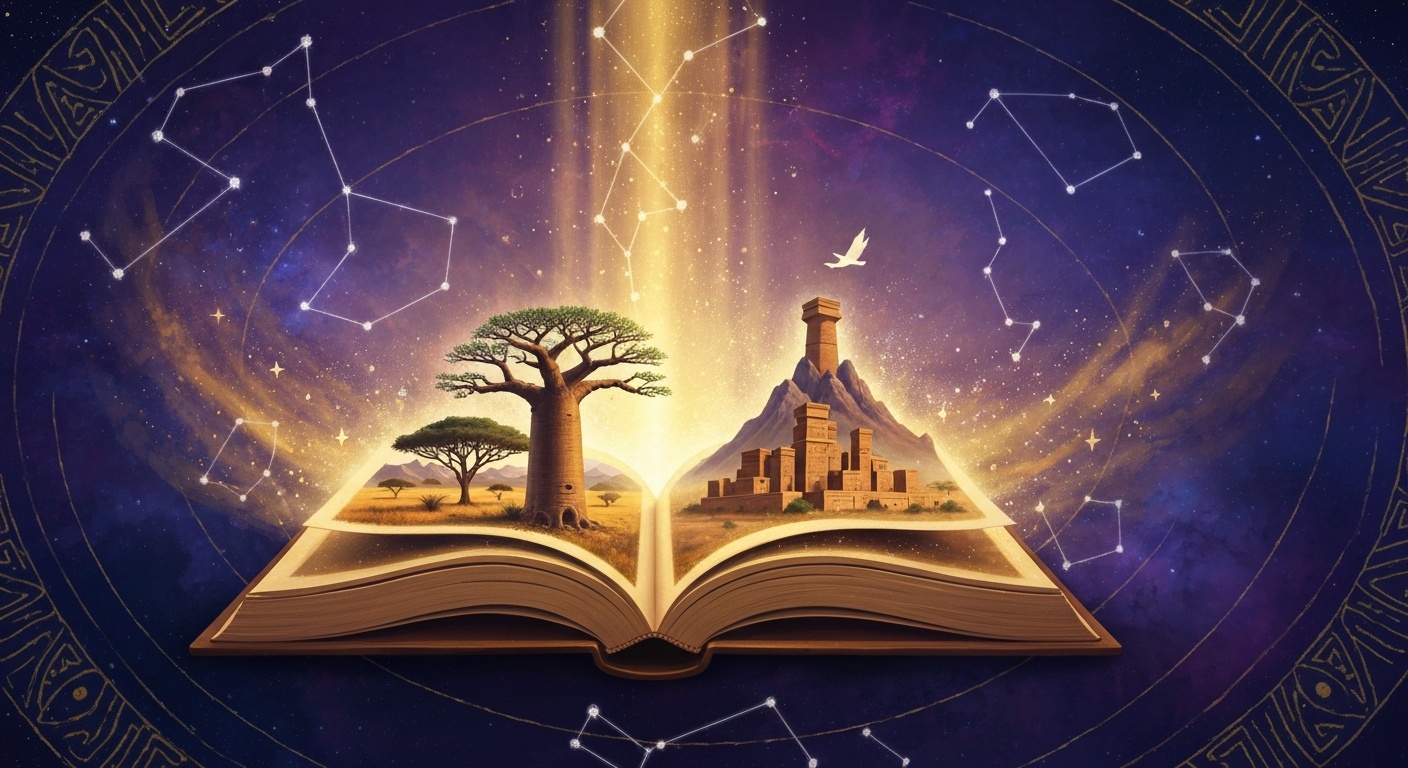
You've heard the buzz. African fantasy is having a moment—from award-winning novels to Hollywood adaptations. But with so many options, where do you actually begin? This guide will help you find your perfect entry point based on what you already love to read.
The good news: African fantasy isn't a monolith. It spans everything from fast-paced YA adventure to dense literary fiction, from West African mythology to Southern African spirituality. There's something here for everyone—you just need to know where to look.
What Makes African Fantasy Different
Before diving into recommendations, it helps to understand what sets African fantasy apart:
- Community over individualism: Many African fantasies centre collective identity rather than the lone hero. Philosophy like Ubuntu ("I am because we are") shapes how magic, power, and heroism work.
- Ancestral presence: The dead aren't gone—they're active participants in the living world. This isn't "necromancy" in the Western sense; it's ongoing relationship.
- Oral tradition influence: Many stories embrace the rhythms and structures of oral storytelling—repetition, communal memory, narrative as living practice.
- Diverse mythologies: Yoruba orishas, Zulu ancestors, Sesotho cosmology, Egyptian gods—Africa contains multitudes, and so does its fantasy.
"African fantasy doesn't ask permission to exist. It draws from traditions that predate Western fantasy by millennia."
Find Your Entry Point
If You Loved Black Panther...
You want Afrofuturism—African identity meeting technology and speculative imagination. Start here:
Binti
A Himba girl leaves Earth to attend an intergalactic university, carrying her culture into the stars. This novella is short, accessible, and beautifully balances tradition with innovation. Perfect first taste of Afrofuturism.
Rosewater
Nigeria, alien biodome, psychic powers, government conspiracy. If you want African sci-fi that's smart, tense, and uniquely Nigerian, this Arthur C. Clarke Award winner delivers.
If You Love Epic Fantasy...
You want saga-scale world-building with African settings. These deliver:
Children of Blood and Bone
Yoruba mythology fuels this YA epic about magic, oppression, and revolution. Fast-paced, emotionally intense, and accessible even if you know nothing about Nigerian culture. The most popular entry point for a reason.
The Rage of Dragons
Ethiopian-inspired military fantasy with a caste system, dragon riders, and a vengeance-driven protagonist. Dense world-building for readers who like their fantasy weighty.
If You Prefer Character-Driven Stories...
You want intimate narratives that prioritise emotional depth over spectacle:
RESONANCE: Book One — Reign of a Broken Song
Built on Sesotho cosmology, this Southern African fantasy explores ancestral memory, collective trauma, and spiritual healing. For readers who want fantasy that transforms them, not just entertains them.
The Old Drift
Three Zambian families across generations, blending history, fantasy, and science fiction. Literary, ambitious, and deeply rooted in Southern African experience.
If You Want Something Challenging...
You're ready for literary fantasy that demands your full attention:
Black Leopard, Red Wolf
Pan-African mythology reimagined through unreliable narration and dense prose. Not for beginners—but if you want African fantasy at its most ambitious and uncompromising, start here.
Understanding Regional Differences
Africa isn't one place, and its fantasies reflect that diversity:
- West African fantasy often draws from Yoruba, Igbo, and Akan mythologies—orishas, forest spirits, and ancestral magic. Think: Children of Blood and Bone, Rosewater.
- East African fantasy may incorporate Ethiopian, Kenyan, or Somali traditions—ancient kingdoms, warrior cultures, and Christian/Islamic mystical influences. Think: The Rage of Dragons.
- Southern African fantasy draws from Zulu, Sesotho, Shona, and other traditions—Ubuntu philosophy, ancestral reverence, and healing-centred spirituality. Think: RESONANCE.
- North African fantasy often incorporates Egyptian, Berber, or Maghrebi elements—ancient gods, desert magic, and Mediterranean crosscurrents.
You don't need to know these distinctions to enjoy the books—but awareness enriches the reading experience.
What to Expect
Coming from Western fantasy, you might notice some differences:
- Pacing: Some African fantasy moves differently, embracing cyclical time and communal memory rather than linear plot urgency.
- Language: Many books use African words without glossaries. Context usually makes meaning clear—and the unfamiliarity is part of the experience.
- Morality: Good and evil may be less binary. Trickster figures, moral complexity, and situational ethics are common.
- Spirituality: The divine is often immanent, present in everyday life rather than distant. Ancestors walk alongside the living.
"Reading African fantasy isn't just entertainment—it's an invitation to see the world through different eyes. Accept the invitation."
The Reading Path
Based on your preferences, here's my recommended progression:
- Absolute beginner: Start with Children of Blood and Bone or Binti—both are accessible and immediately engaging.
- Want more depth: Move to Rosewater or The Rage of Dragons for more complex world-building.
- Ready for transformation: Experience RESONANCE or Who Fears Death for fantasy that changes you.
- Seeking the summit: Challenge yourself with Black Leopard, Red Wolf.
There's no wrong door into African fantasy. Each book opens onto a vast landscape of imagination—and once you enter, you'll wonder why you waited so long.
Begin Your Journey with RESONANCE
RESONANCE by Sitreyah Kotelo offers a distinctive entry into African fantasy—Southern African spirituality, ancestral wisdom, and a story that heals as it unfolds.
$4.99 / £3.99 / R89
Get Your Copy